
What do you check during a roof inspection?
We check the whole roof system, not just the shingles: the ceilings inside, the attic, the decking, every vent and penetration, the flashing, the valleys and the gutters. Most roof failures come from a short list of ordinary problems, and each one leaves signs a trained eye can spot before it turns into a ceiling stain.
- Ceilings and interior walls. We look for water stains and follow any we find back to the source on the roof.
- Attic ventilation. Whether the attic can breathe. Trapped heat cooks shingles from underneath, and trapped moisture rots the deck.
- Decking. Whether it feels spongy or solid underfoot, and whether nails are still holding. Where a shingle is missing, we look at the wood directly.
- Shingles and nailing. Missing, cracked or lifted shingles, broken seal strips, granule loss, and installation faults such as nails driven at an angle or pushing up under the shingle above.
- Vents and pipe boots. Cracked rubber collars, rusted or dented vents, and any blockage.
- Flashing. Chimneys, sidewalls and skylights, where much of the water that gets in finds its way.
- Valleys. Wear, debris and how the shingles were cut.
- Gutters, fascia and soffits. Clogged or sagging gutters push water back under the roof edge.
How do you document what you find?
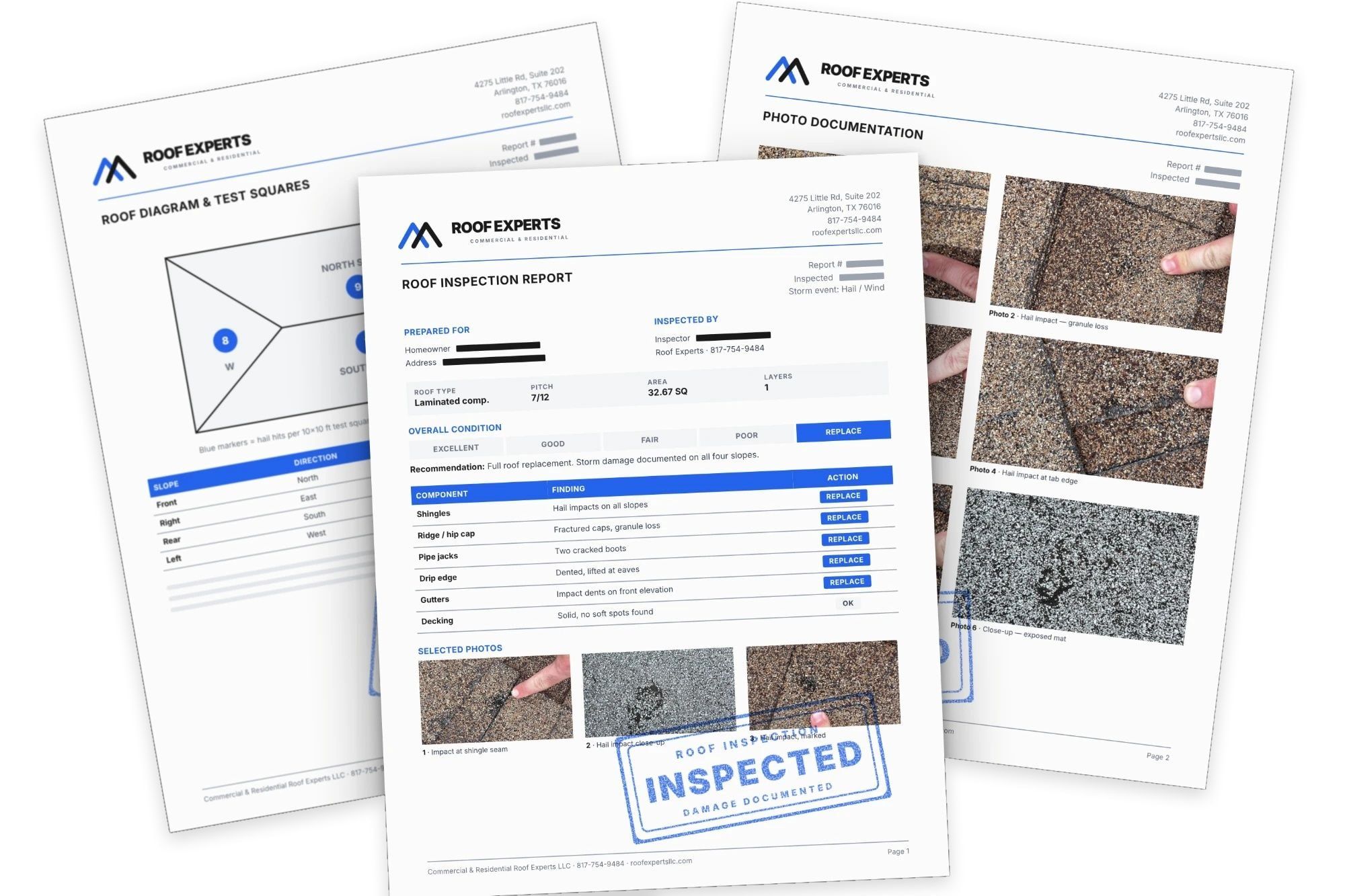
Every finding is photographed. We take wide shots so you can see where on the roof a problem sits, and close-ups so you can see the problem itself. Afterward we sort the findings into what needs attention now and what can reasonably wait. If there is nothing wrong, we tell you that too.
Those photos are useful well beyond the inspection. They show an insurance adjuster where the damage is, give a buyer or seller something concrete to negotiate with, and give you a baseline to compare against after the next storm. If the inspection turns up damage that needs work, you get a written estimate for a repair or, where it is genuinely needed, a replacement.
When should you book a roof inspection?
Book one after any hail or high-wind storm, before you buy or sell a house, when you see a stain or damp spot inside, before adding solar panels, and once a year as routine maintenance. Hail damage in particular is often invisible from the ground, and insurance policies expect storm damage to be reported promptly.
- After a storm. Bruised shingles and lifted tabs rarely show from the yard.
- Before buying or selling. A buyer learns what they are inheriting; a seller with a clean report removes a negotiating point.
- When something shows inside. A ceiling stain, a damp rafter or daylight through the deck should be looked at now, not next month.
- Before solar. Panels are expensive to remove and reinstall if the roof under them needs work soon. See preparing your roof for solar panels.
- Once a year. Small defects are cheap. The same defect two years later, after water has reached the decking, is not.
What does a hail damage inspection look for?
Hail damage on shingles shows as dark bruises where granules have been knocked off, soft spots where the mat has fractured, and cracked or punctured tabs. We also check the soft metals around the roof, such as vents, gutters, downspouts and window screens, because dents there help confirm the size and direction of the hail.
We photograph each slope separately, because adjusters assess damage slope by slope. The date of the storm matters too. Your claim is tied to a date of loss, so we note what we see and when. If you go ahead with a claim, we can meet the adjuster at the property and walk the damage with them. The storm damage page covers the full process after hail, and our insurance claims guide explains how the claim itself works.
Can you inspect a roof before I buy a house?
Yes, and it is worth doing. A general home inspection usually assesses the roof from the ground or briefly from a ladder. A dedicated roof inspection walks the slopes, checks flashing, penetrations and the attic, and tells you whether the roof has years left or is close to needing replacement. That is useful information before you sign.
If the roof needs work, the photos and findings give you something specific to take to the seller. If you have just moved in, our guide on what new homeowners should know about their roof is a good next read.
How do I book a free inspection?
Call us at (817) 754-9484 or request an inspection online. Tell us the address, what prompted the call and anything you have noticed inside. We confirm a time with you, inspect, and walk you through the photos. There is no charge and no obligation to book any work.
Roof Experts, LLC has been based in Arlington since 2017, at 4275 Little Rd #202, and inspects homes and commercial buildings across DFW.