



Which commercial roof systems do you install?
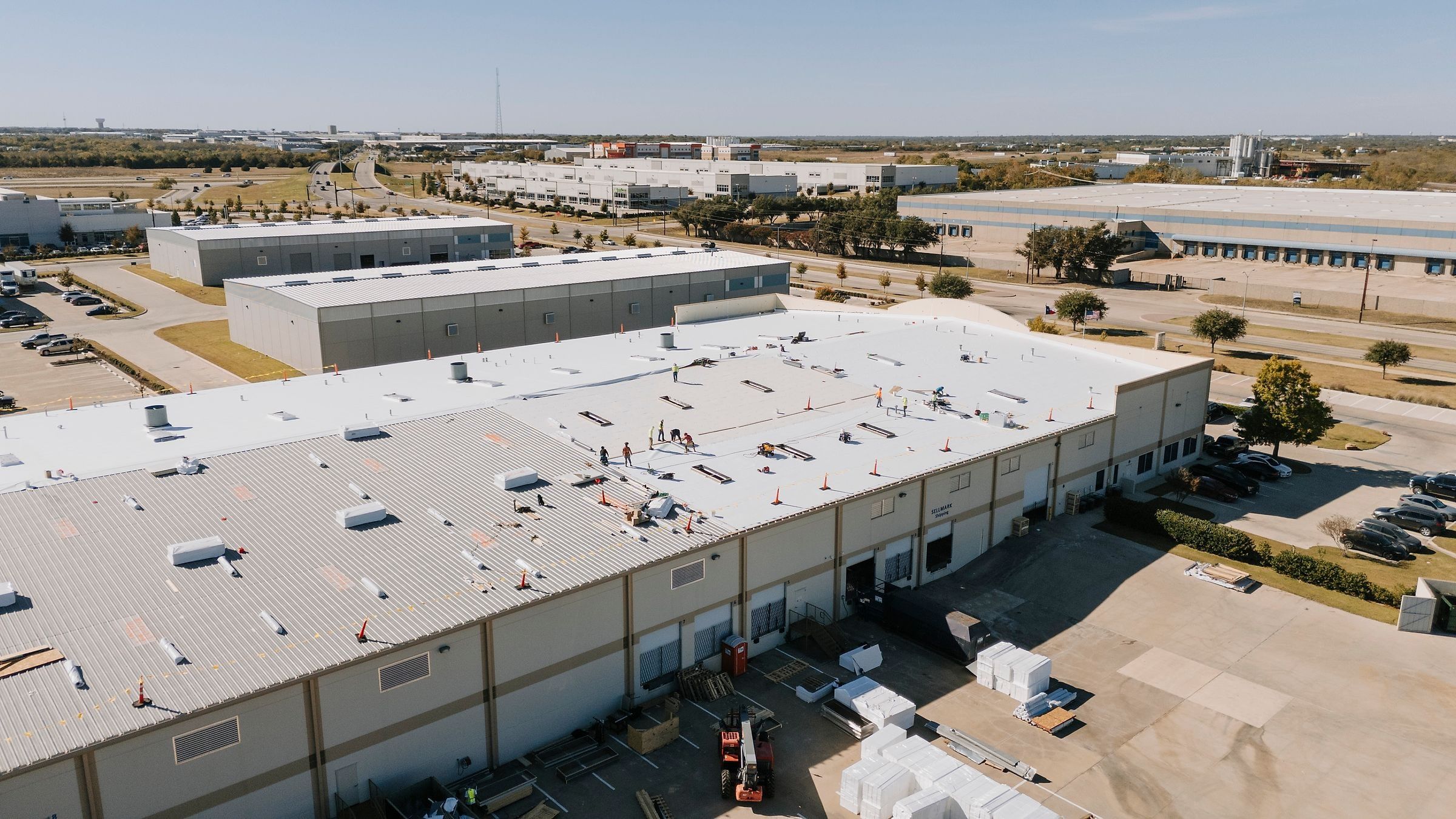
We install every major low-slope system: TPO, PVC, EPDM and modified bitumen, plus silicone and acrylic coatings over a sound existing roof. We also install metal and shingle roofs on commercial buildings such as churches, multifamily and small offices. We recommend a system only after a commercial roof assessment of your building.
Roof Experts, LLC is Elevate (Holcim) and GenFlex certified for single-ply and modified bitumen systems, and GACO certified for silicone and acrylic coatings. Each system has its own page with the install methods, the scope it should include and when it is the wrong choice.
| System | What it is | Usually a good fit |
|---|---|---|
| TPO roofing | White single-ply membrane with hot-air-welded seams | Retail, office, warehouse, multifamily and light-industrial roofs; recovers where the existing roof is dry |
| PVC roofing | Heat-welded single-ply membrane that resists grease, oils and chemicals | Restaurants, commercial kitchens and plants with exhaust on the roof |
| EPDM roofing | Synthetic rubber membrane that stays flexible and is simple to repair | Buildings where repairability matters; taped seams and a standard black sheet are the trade-offs |
| Modified bitumen | Multi-ply asphalt roof reinforced with polyester or fiberglass, SBS or APP, torch-applied, cold-applied or self-adhered | Roofs with foot traffic or where toughness matters more than a white surface; the modern successor to built-up tar-and-gravel |
| Silicone roof coatings | Fluid-applied coating over a sound, repaired roof | Flat roofs that pond, once a moisture survey and adhesion test confirm the roof qualifies |
| Acrylic roof coatings | Water-based, reflective fluid-applied coating | Metal and well-drained roofs; not where water ponds |
Not sure which membrane fits? Our TPO vs PVC vs EPDM comparison puts the three side by side on seams, grease resistance, DFW heat and hail, and repairs.
What does a commercial roof assessment include?
A commercial roof assessment is a walk of the whole roof with a written result. We inspect the membrane, seams, flashings, drains, edge metal and rooftop equipment, look for standing water, check for wet insulation where the roof calls for it, and photograph what we find. You get a written repair, coating or replacement recommendation.
Commercial roofs differ from homes in ways that change the work. Most are low-slope, drained by internal drains or scuppers rather than gutters, covered in HVAC equipment, and occupied while the work happens. The assessment notes all of that, so the scope reflects how your building actually runs.
How do flat and low-slope roofs fail?
Commercial roofs rarely fail all at once. They fail at a short list of predictable points: seams and laps as adhesives and welds age, flashings at parapets, curbs and penetrations, drains and scuppers that clog and leave standing water, damage from HVAC service traffic, and moisture trapped in the insulation where nobody can see it.
- Seams and laps. The joints in the membrane are its weakest line.
- Flashings. Parapet walls, rooftop units, curbs and pipe penetrations all rely on flashing details that age faster than the field of the roof.
- Ponding water. Water that sits for days after rain accelerates wear and finds every weak seam.
- Foot traffic. Dropped tools and boots from equipment service puncture membranes more often than storms do.
- Wet insulation. Water that gets in spreads sideways through the insulation, well beyond the point of entry, and stays hidden until ceiling tiles stain.
A leak inside a commercial building is rarely directly under its source. We trace it back before scoping a repair, the same way we do on a home.
Repair, coat or replace: how do you decide?
The deciding factors are the condition of the membrane, whether the insulation underneath is wet, and how long you plan to hold the building. A sound membrane with dry insulation is a candidate for repair or a coating. Widespread membrane failure or wet insulation usually means replacement. We show you the assessment findings before recommending any of the three.
| Option | When it usually fits | What to watch for |
|---|---|---|
| Repair | Damage limited to seams, flashings or specific areas | Repeated repairs in new places point to a wider problem |
| Coating | Membrane mostly sound, insulation dry | Coating over wet insulation traps the moisture |
| Recover | Existing roof dry, one existing layer, sound deck, and code and the manufacturer allow it | Building code allows up to two roof layers on a flat roof; wet insulation has to come out either way |
| Metal-over-metal retrofit | Sound metal building where a new metal roof can be framed over the old one | Uses a sub-framing system over the existing panels, so the building stays dry while the new roof goes on |
| Replacement | Widespread membrane failure or wet insulation | Larger project; plan around building operations |
Silicone and acrylic coating pages explain how a roof qualifies for restoration, and the TPO page covers recover versus tear-off.
Can roof work happen while the business stays open?
In most cases, yes. A failing roof over customers and staff is a safety and liability problem, so the goal is to fix it without closing the doors. We plan the sequence of work, access, staging and noise with you before we start, so the disruption is agreed in advance rather than discovered on the day.
That planning starts at the assessment. We note where deliveries, customer entrances and rooftop equipment are, which areas of the building are most sensitive to leaks or noise, and what has to stay running. The written scope reflects those constraints, and the schedule is built around them.
What warranty comes with a commercial roof?
Roof Experts, LLC gives its own workmanship warranty, covering our labor, and the term depends on the roof type. Low-slope roofs such as TPO, PVC, EPDM and modified bitumen, and silicone and acrylic coating jobs, carry a 2-year workmanship warranty. Commercial metal and shingle roofs carry a 5-year workmanship warranty.
Manufacturer NDL warranties available. Your written scope states which options apply to your roof. When you compare bids, ask each contractor to put in writing who backs each warranty, what it covers and how long it runs.
Recent commercial roofing projects
These are three Roof Experts, LLC commercial jobs, each listed with the city and what we did. Two are on TPO roofs and one is a PVC roof on a restaurant, which is where PVC earns its place over TPO. Photos for each are on the TPO and PVC pages as they are cleared for use.
- Mansfield, TX. TPO retrofit over an existing R-panel metal roof. See TPO roofing.
- Galveston, TX. Emergency temporary repair on a TPO roof blown off in a hurricane.
- Decatur, TX. PVC roof, restaurant. See PVC roofing.
How do commercial storm and hail claims work?
Hail damages single-ply membranes and coatings in ways that are hard to see and easy to dispute. Commercial claims also involve larger scopes and code requirements. We photograph and measure the damage, prepare an itemized scope, meet the adjuster at the property, and explain what the insurer approves. The building owner files and manages the claim.
We are not a public adjuster and do not negotiate claims on your behalf. Our insurance claims guide explains the process, and our write-up of a commercial claim from start to finish shows how the documentation comes together on a real building.
Why does maintenance matter on a commercial roof?
Most commercial roofs that need early replacement were never maintained. Clearing drains, resealing flashings and repairing seams as they open costs little compared with replacing a roof years before its time. Scheduled inspections also give you a dated record of the roof’s condition, which helps with insurers and buyers.
Our post on why commercial roof maintenance matters covers what a maintenance visit should include, and the seven commercial roofing products post compares the options in plain terms.
Why DFW owners call Roof Experts, LLC for commercial roofs
Roof Experts, LLC has served Dallas–Fort Worth from our Arlington office at 4275 Little Rd #202 since 2017. We’re Elevate (Holcim) and GenFlex certified, GACO certified, insured and registered with the City of Arlington. We put the whole scope in writing and say when a repair or coating will do. We’re rated 4.9 on Google.
We serve commercial buildings across DFW, including North Richland Hills and Fort Worth. For tips on comparing contractors, see finding a Fort Worth commercial roofing company.
To get a commercial roof assessment, call (817) 754-9484 or contact us online.