

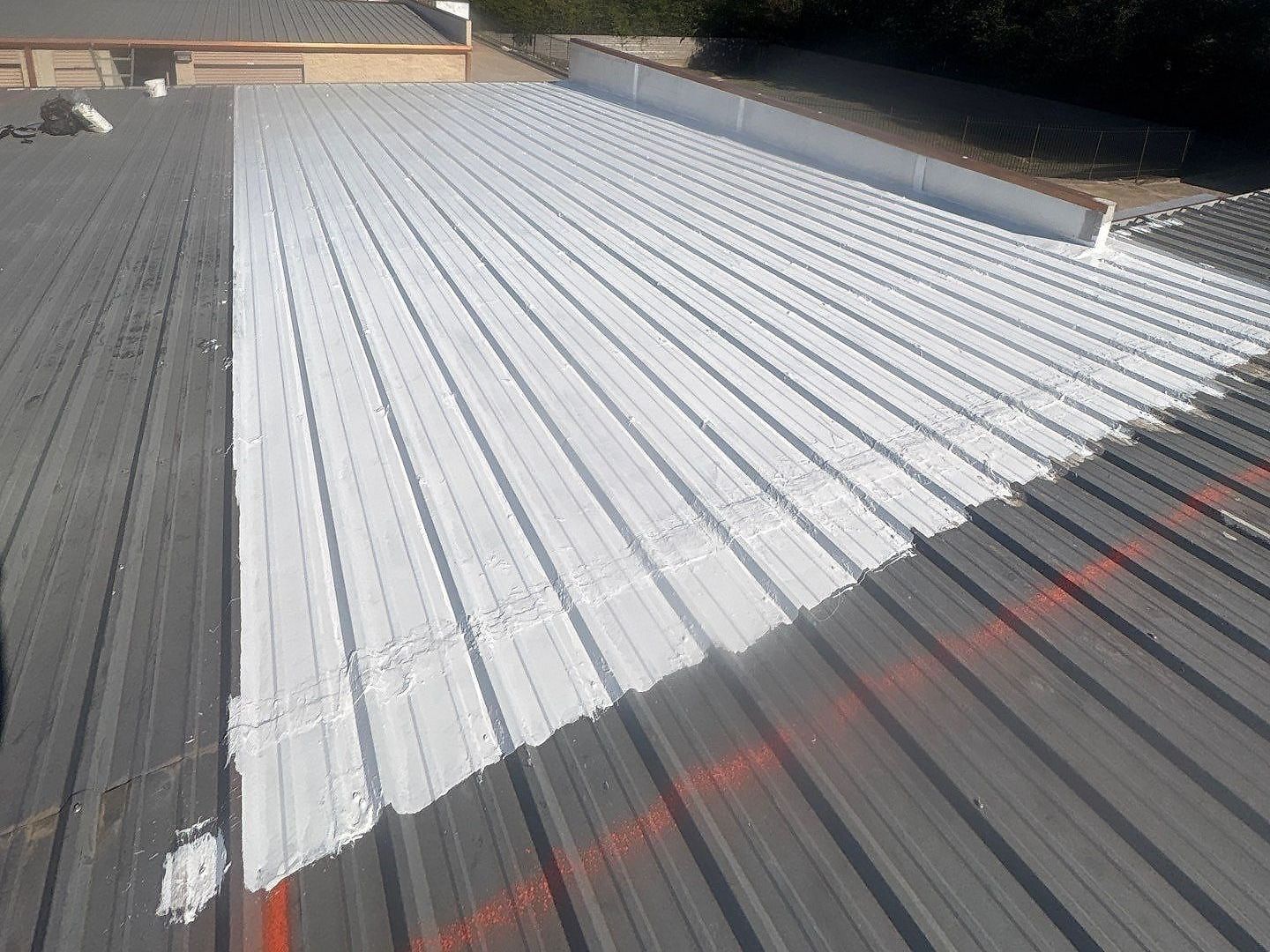
What is an acrylic roof coating?
Acrylic is a water-based elastomeric coating that dries to a flexible, reflective film. It’s applied over a cleaned and repaired roof, often with primer and reinforced seams, at a specified thickness. It’s popular on metal roofs and well-drained single-ply or modified bitumen roofs, where its reflectivity helps cut rooftop heat during DFW summers.
Because it is water-based, acrylic cleans up with water and goes on in dry weather within the manufacturer’s temperature limits. Roof Experts, LLC is GACO certified and applies GACO coating products.
When is acrylic the right choice?
Acrylic fits roofs that drain well: metal, sloped roofs, and low-slope roofs without standing water, especially when budget matters and reflectivity is the goal. It’s a poor fit for flat roofs that pond, because prolonged standing water can soften and degrade it. GACO’s guidance reserves acrylics for roofs without ponding water.
| Usually a good fit | Think twice |
|---|---|
| Metal roofs once rust, fasteners and seams are treated | Flat roofs where water stands after rain (see silicone) |
| Sloped roofs and low-slope roofs that drain well | Roofs with wet insulation or failed seams |
| Owners who want reflectivity on a budget | Surfaces that won’t hold adhesion after cleaning |
Where acrylic doesn’t fit, see when an acrylic coating is the wrong choice below.
Can your roof be restored with acrylic?
A roof qualifies when it drains well, the deck is sound, the insulation is mostly dry and the cleaned surface passes an adhesion test. On metal, rust and fasteners must be treatable. Standing water after rain, wet insulation or widespread seam failure rule acrylic out. We check drainage and moisture on every roof before we write a proposal.
| Check | What we look for | What rules acrylic out |
|---|---|---|
| Drainage | Water clears after rain; drains and scuppers open | Water that stays ponded after rain |
| Roof deck or metal panels | Sound structure; surface rust that can be treated | Structural damage or severe corrosion |
| Insulation moisture | Mostly dry; small wet areas cut out and replaced | Wet insulation across large areas |
| Adhesion | A field adhesion test on the cleaned surface, primer where the manufacturer requires it | Coating won’t bond even after cleaning and primer |
| Seams, fasteners, penetrations | Repairable and reinforceable before coating | Seams failing across the whole roof |
We scan the roof with an infrared camera to find wet insulation before we recommend a coating, and we run an adhesion test on the existing surface so the coating is matched to what it has to stick to.
Acrylic coatings on metal roofs
On metal, a restoration addresses rust, loose or backed-out fasteners and open seams before coating. Typical steps are cleaning, rust treatment and primer, sealing fasteners and seams, then base and top coats. Done right, it renews weather protection and reflectivity without a tear-off, though structural or severe corrosion issues call for repair or replacement.
| Step | What it covers |
|---|---|
| Clean | Pressure-wash dirt, chalking and loose paint |
| Treat rust | Rust treatment and primer where the manufacturer requires it |
| Fasteners | Replace or seal loose and backed-out fasteners |
| Seams and penetrations | Reinforce seams, laps, curbs and pipe boots |
| Coat | Base and top coats at the specified thickness |
If the panels are past saving, our metal roofing page covers replacement options.
What’s included in an acrylic restoration?
An acrylic scope lists the inspection and moisture check, cleaning, rust or substrate prep, primer if required, and reinforcement of seams, fasteners and penetrations. It also states the base and top coats at a specified thickness, plus drainage corrections and flashing repairs. Ask bidders to state thickness and products in writing.
| Scope item | What it means |
|---|---|
| Inspection and moisture check | Drainage, moisture and adhesion checks |
| Cleaning and prep | Pressure-wash; rust or substrate prep |
| Primer | Where the manufacturer requires it |
| Reinforcement | Seams, fasteners and penetrations |
| Base and top coats | GACO coating products and applied thickness, stated in writing |
| Drainage corrections and flashing repairs | Fix low spots and flashings before coating |
| Closeout | Photos of the finished roof and your written workmanship warranty |
Prep, reinforcement and coating thickness follow building code and the coating manufacturer’s specification for your roof, and your written scope lists them.
Send us the address, and we’ll inspect the roof and give you a written scope. Get a commercial roof assessment or call (817) 754-9484.
Restore or replace: when does an acrylic coating make sense?
Restore with acrylic when the roof drains well, the deck or panels are sound, the insulation is mostly dry and the surface passes an adhesion test. Replace when moisture is widespread, seams have failed across the roof or the structure is damaged. Where water ponds but the roof is otherwise sound, silicone is usually the better coating.
| Restore with acrylic when… | Replace (or choose silicone) when… |
|---|---|
| The roof drains well | Water stays ponded after rain: look at silicone |
| Insulation is mostly dry | Insulation is wet across large areas |
| The surface passes an adhesion test | Seams have failed across the whole roof |
| Metal rust is surface-level and treatable | Corrosion or structural damage is severe |
Acrylic vs silicone roof coatings
Silicone tolerates ponding water and strong UV, and suits flat roofs. Acrylic generally costs less, is water-based and easy to clean up, and suits metal and sloped or well-drained roofs. The roof’s drainage, its substrate and how long you plan to hold the building usually decide. We recommend one in writing after inspecting.
| Acrylic | Silicone | |
|---|---|---|
| Ponding water | Not suitable | Tolerates ponding |
| Base | Water-based, cleans up with water | Moisture-cured silicone |
| Relative cost | Lower | Higher |
| Usual fit | Metal, sloped and well-drained roofs | Flat and low-slope roofs, including ones that pond |
For flat roofs that hold water, see silicone roof coatings.
How long does an acrylic coating last, and what warranty comes with it?
Service life depends on the product, the applied thickness, the surface underneath and maintenance. Acrylic roofs benefit from periodic cleaning and inspection, and many can be recoated when the film wears. Roof Experts, LLC gives a 2-year workmanship warranty on acrylic coating jobs, covering our labor. Manufacturer NDL warranties available.
Clean and inspect the roof periodically and after major hail or wind, and keep drains clear so water doesn’t stand. Our post on why commercial roof maintenance matters covers what a maintenance visit should include.
Our Commercial Roof Care Plan puts the roof on a schedule: inspections every spring and fall (quarterly visits on the top plan), drains and scuppers cleared, small repairs made on the spot, and a photo report with a Roof Condition Index score after every visit.
What does an acrylic coating project look like?
An acrylic project runs in five stages. We inspect the roof and check drainage and moisture, give you a written recommendation for acrylic, silicone or replacement, prep and repair the surface, apply the coats at the specified thickness, and close out with photos and warranty paperwork. We schedule around tenants and operations.
- Inspect. We check drainage, moisture and adhesion.
- Recommend in writing. Acrylic, silicone or replacement, with photos and a written scope.
- Prep and repair. Cleaning, rust treatment, seams and fasteners.
- Coat. Base and top coats at the specified thickness, scheduled for dry weather because acrylic is water-based.
- Close out. Photos of the finished roof and your written workmanship warranty.
At closeout you get our workmanship warranty certificate, the manufacturer warranty certificate where a manufacturer warranty applies to your system, and lien waivers.
What affects the cost of an acrylic roof coating?
Each roof is priced after inspection, because cost depends on roof size, the existing surface, how much cleaning, rust treatment and primer it needs, the fasteners and seams to reinforce, drainage and flashing repairs, the applied thickness and access. We don’t publish prices. You get a written scope and price for your roof.
- Roof area and slope
- Existing surface (metal, single-ply, modified bitumen) and its condition
- Cleaning, rust treatment and primer
- Fasteners, seams and penetrations to reinforce
- Drainage corrections and flashing repairs
- Applied thickness and number of coats
- Access, equipment and tenant scheduling
When is an acrylic coating the wrong choice?
An acrylic coating is a poor fit where water stays ponded on the roof after rain, where insulation is wet or seams have failed, or where the old surface won’t hold adhesion. Silicone, a repair or a full replacement may serve those roofs better. We test the roof first and say so in the written scope.
| Situation | Why acrylic is a poor fit | What to look at instead |
|---|---|---|
| Water stays ponded after rain | Standing water softens and degrades acrylic | Silicone roof coatings |
| Wet insulation or failed seams | A coating over trapped moisture or open seams fails early | Repair, or replacement such as EPDM roofing or modified bitumen |
| Old surface won’t hold adhesion | The coating can’t bond | Repair or full replacement |
If replacement is on the table, compare TPO vs PVC vs EPDM side by side. Roof Experts, LLC installs TPO, PVC, EPDM and modified bitumen roofs and applies silicone and acrylic coatings, so the system in your written scope is the one that fits the roof.
Why choose Roof Experts, LLC for acrylic roof coatings?
Roof Experts, LLC is GACO certified and based in Arlington, serving Dallas–Fort Worth since 2017. We’re insured and registered with the City of Arlington. We’re rated 4.9 on Google. We put the drainage and fit check in writing before we recommend acrylic, and say when silicone fits better.
- Drainage, moisture and adhesion checks before any coating recommendation.
- An itemized written scope with products and applied thickness.
- One contractor for coatings and replacement membranes. See all of our commercial roofing services.
Our office is at 4275 Little Rd #202, Arlington, TX 76016. To get started, get a commercial roof assessment or call (817) 754-9484.