
Fort Worth’s hail record
Fort Worth has lived through some of the most damaging hail in the country. On May 5, 1995, the Mayfest storm dropped hail up to softball size along the Trinity River during the festival, injured more than 400 people and caused an estimated 2 billion dollars in damage across Tarrant and Dallas counties, according to the National Weather Service.
Five years later, on March 28, 2000, a tornado tore through downtown Fort Worth, and the same storms sent hail that severely damaged roofs and cars in Lake Worth and Saginaw, per the NWS Fort Worth review. Storms moving east out of Parker County reach Fort Worth before the rest of the Metroplex, which is why hail damage is a standing question here rather than a rare event.
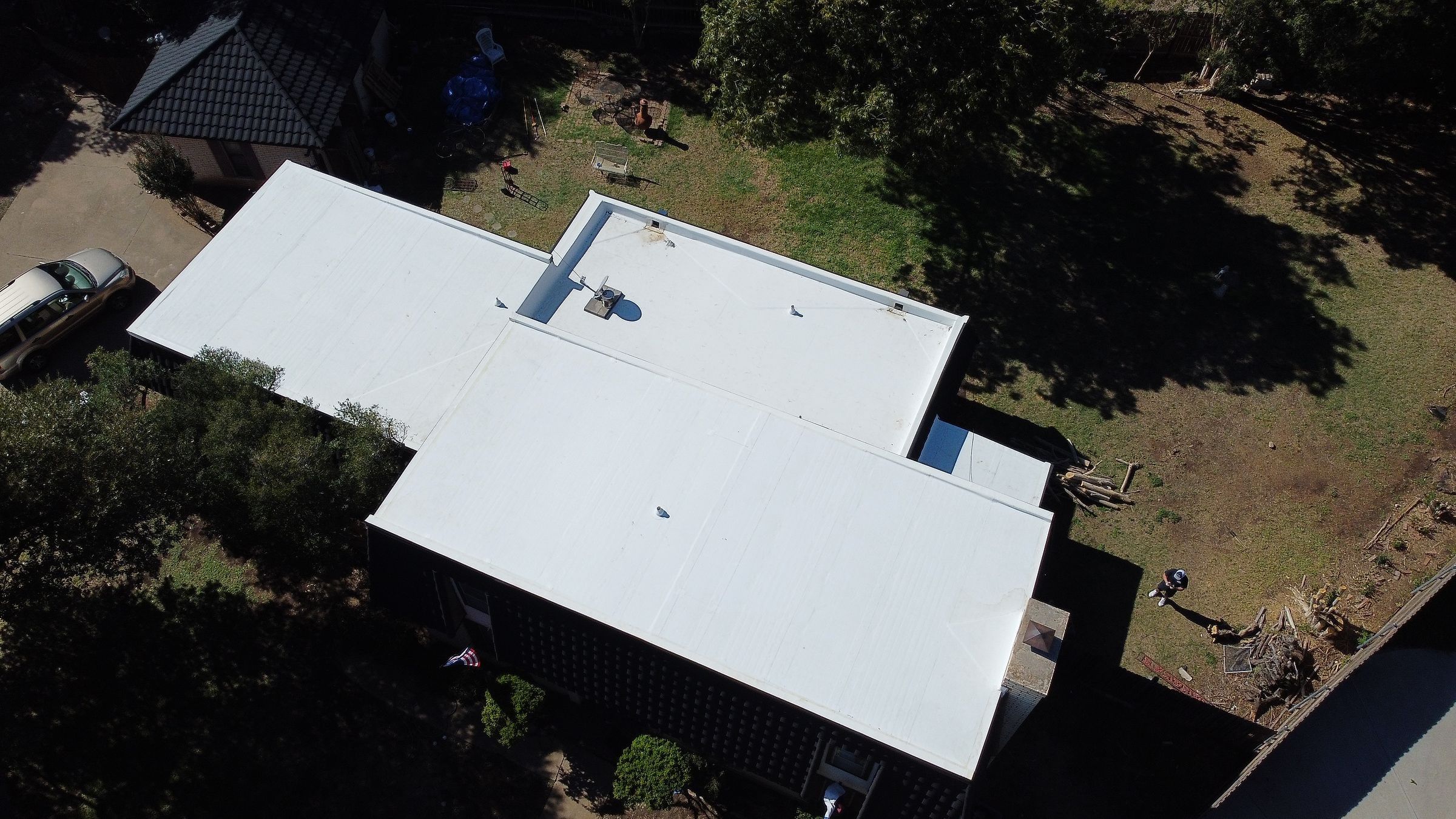
What we look for after a Fort Worth hailstorm is rarely dramatic: bruised shingles and lost granules on the exposed slopes, cracked seal strips, and dents in vents, gutters and flashing. Our Fort Worth hail damage roof repair page covers the inspection, and roof storm damage covers what happens next.
When Fort Worth requires a roofing permit
Fort Worth handles re-roofs differently from Arlington. According to the city’s residential re-roofing FAQ, a one- or two-family home needs no permit when only the shingles are replaced, but a permit is required as soon as any decking is replaced. The work must meet code either way.
The same FAQ settles several points that come up on almost every Fort Worth job:
- Drip edges are required when re-roofing, even if the house never had them.
- Crickets are required where they don’t exist today, typically on the high side of a chimney.
- New decking cannot be laid over existing decking.
- Sound 3/8 inch decking can stay on rafters 24 inches apart if the panel is rated for that span.
- Ice barrier underlayment is not required, because the area has no history of ice damming.
Decking condition is often unknown until the old shingles are off, so we explain before the job how a permit is handled if rotten decking turns up. Our Arlington and Fort Worth permit guide compares the two cities.
Historic districts and newer north Fort Worth
Fort Worth’s roofs vary more than most cities’ because the housing spans so many eras. Older homes in Fairmount, Ryan Place and Arlington Heights tend to have steeper pitches, more valleys and sometimes plank decking. Newer subdivisions toward Alliance are mostly on their first roof, and many are now old enough that hail does real, claimable damage.
On older homes we measure on site rather than from satellite images, because porches, dormers and plank decking change how the roof is fastened and flashed. If your home sits in a locally designated historic district, the city may review a change in roof material or color, so we sort that out before the job is scheduled.
On newer homes the question is usually whether to replace like for like or step up to Class 4 impact-resistant shingles. We price both so you can compare.
Roofing services we offer in Fort Worth
We offer our full residential and commercial line in Fort Worth, and three services have their own Fort Worth page. Every estimate is written and itemized after we measure the roof, and the inspection is free whether or not you hire us.
- Roof replacement in Fort Worth
- Roof repair in Fort Worth
- Hail damage roof repair in Fort Worth
- Insurance claim help and roof inspections
- Commercial roofing for low-slope buildings. Our article on finding a Fort Worth commercial roofing company covers what to ask.
For what drives the price, see the DFW roof replacement cost guide. We also work in Arlington, Haltom City and Burleson.
Roofing services in Fort Worth
- Hail Damage Roof Repair in Fort Worth, TX
- Roof Repair in Fort Worth, TX
- Roof Replacement in Fort Worth, TX