

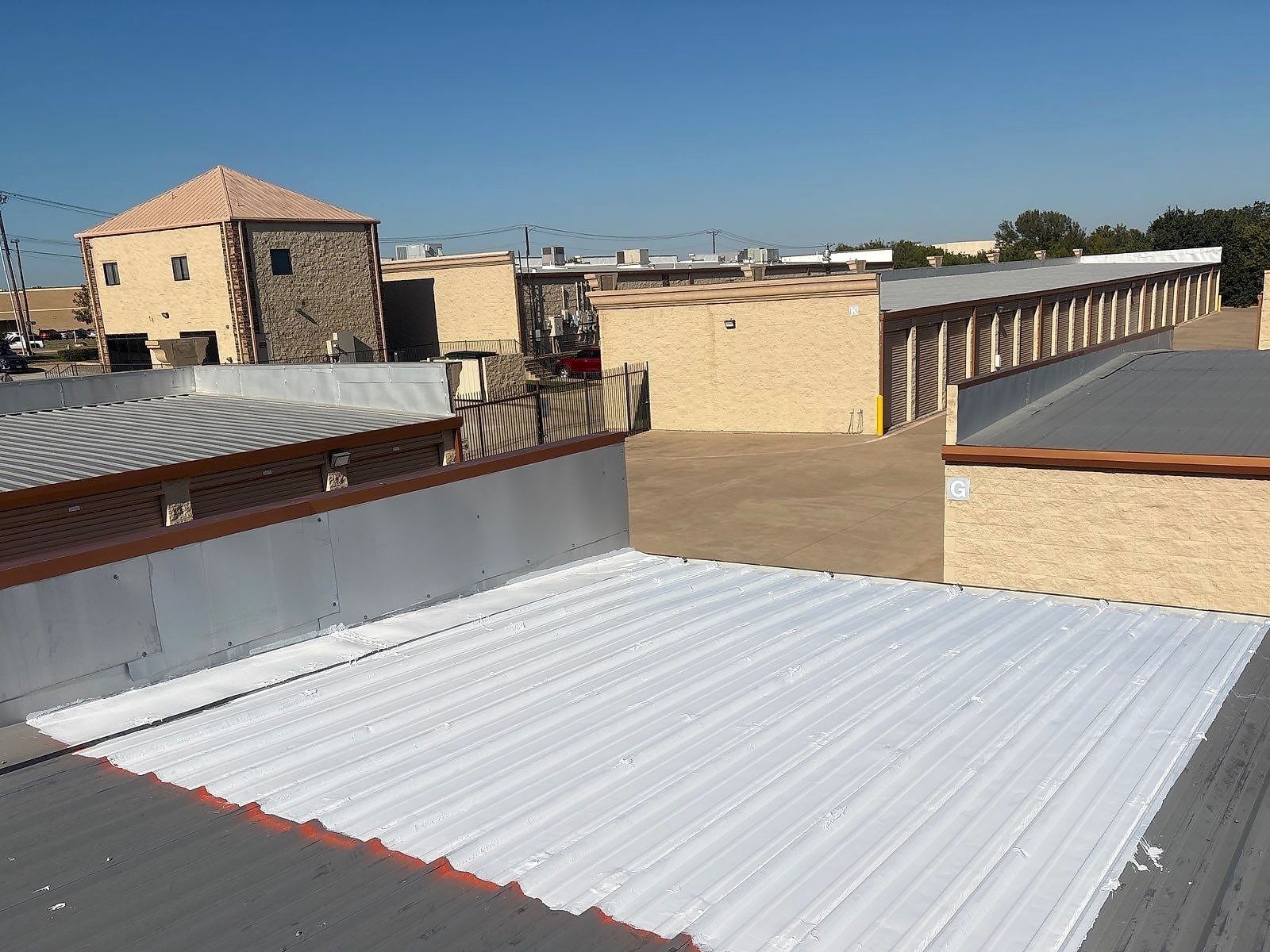
What is a silicone roof coating, and which buildings is it right for?
Silicone is a moisture-cured, fluid-applied coating that forms a continuous, flexible layer over an existing low-slope roof. It resists UV and tolerates standing water, so it suits DFW warehouses, retail centers, offices and multifamily buildings with flat roofs that pond. It goes over a cleaned and repaired roof, never over active leaks or failures.
Silicone is applied in one or more coats at a specified thickness after the roof is cleaned, repaired and reinforced at seams and penetrations. GACO’s published product information for GacoRoof lists aged TPO and EPDM, modified bitumen, built-up roofs, metal, concrete and spray foam among the surfaces its silicone bonds to, with some single-ply membranes needing a primer first.
It is usually the right fit when:
- the roof is low-slope and holds water after rain;
- the membrane is aged but still mostly intact;
- the building can’t easily take a tear-off because of tenants, operations or inventory.
It is usually the wrong fit when insulation is wet across large areas, the deck is damaged or the membrane has failed broadly. In those cases we say so and price a replacement instead. See when silicone is the wrong choice below.
Can your roof be restored with silicone?
A roof qualifies when the deck is structurally sound, the insulation is mostly dry and the existing membrane will bond with the coating after repairs. Wet insulation, widespread membrane failure or a damaged deck rule a coating out. We answer this on every DFW roof with a moisture survey and an adhesion test before we write any proposal.
| Check | What we look for | What rules a coating out |
|---|---|---|
| Roof deck | Sound, no sagging or rust-through, attachments holding | Structural damage or widespread deck deterioration |
| Insulation moisture | Mostly dry insulation; wet areas small enough to cut out and replace | Wet insulation across large areas of the roof |
| Existing membrane | TPO, EPDM, modified bitumen, built-up, metal or spray foam that is aged but mostly intact | Broad membrane failure, splitting or delamination |
| Adhesion | A field adhesion test on the cleaned membrane, per the manufacturer’s instructions; primer where the manufacturer requires it | Coating won’t bond even after cleaning and primer |
| Seams, penetrations, flashings | Repairable and reinforceable before coating | Flashings or edge metal that need full rebuilding first |
| Drainage | Drains and scuppers clear; silicone tolerates ponding | Drainage that needs rebuilding (tapered insulation, new drains) usually points to replacement |
The substrate and adhesion criteria follow GACO’s published GacoRoof guidance. Roof Experts, LLC is GACO certified and applies GACO coating products.
We scan the roof with an infrared camera to find wet insulation before we recommend a coating, and we run an adhesion test on the existing surface so the coating is matched to what it has to stick to.
What’s included in a silicone roof restoration?
A written restoration scope lists the moisture survey, removal and replacement of wet areas, cleaning, primer where the manufacturer requires it, and reinforcement of seams, penetrations, drains and flashings. It then states the base and top coats at a specified dry-film thickness or coverage rate. Ask every bidder to put that thickness in writing.
| Scope item | What it means |
|---|---|
| Moisture survey | Finds wet insulation before anything is coated |
| Wet-area replacement | Cut out and replace wet insulation and membrane where the survey finds it |
| Cleaning | Debris removal and washing so the coating can bond, per the manufacturer’s instructions |
| Primer | Only where the manufacturer requires it for the substrate |
| Seam and penetration reinforcement | Fabric or sealant at seams, penetrations, drains and flashings |
| Coating thickness | Base and top coat at a specified dry-film thickness (mils) or coverage rate |
| Thickness verification | Wet-film gauge readings taken during application |
| Closeout | Photos of the finished roof and your written workmanship warranty |
Seam reinforcement and coating thickness follow building code and the coating manufacturer’s specification for your roof, and your written scope lists them.
Send us the address, and we’ll inspect the roof and give you a written scope. Get a commercial roof assessment or call (817) 754-9484.
Restore or replace: when does a silicone coating make sense?
Restoration makes sense when the roof qualifies, you want to avoid tear-off and tenant disruption, and you plan to maintain the roof over time. Replacement is the better choice when insulation is wet across large areas, drainage needs rebuilding or the deck is compromised. We put both options in writing, with the survey evidence, so you can compare.
| Restore with silicone when… | Replace when… |
|---|---|
| The survey shows mostly dry insulation | Wet insulation covers large areas |
| The membrane bonds after cleaning and repairs | The membrane has failed broadly |
| Ponding is the main problem and drains work | Drainage itself must be rebuilt |
| Tenants or operations make tear-off hard | The deck or structure needs repair |
If the survey points to replacement, we say so and price the replacement system that fits the building, such as TPO roofing, EPDM roofing or modified bitumen roofing. Our TPO vs PVC vs EPDM comparison sets the single-ply options side by side. Roof Experts, LLC installs TPO, PVC, EPDM and modified bitumen roofs and applies silicone and acrylic coatings, so the system in your written scope is the one that fits the roof, not the one we happen to sell.
Silicone vs acrylic: which roof coating is right for your building?
Choose silicone for flat roofs with ponding water and strong sun, and for many single-ply and modified bitumen roofs. Choose acrylic for sloped or well-drained roofs, such as metal, where water sheds quickly and budget matters most. GACO’s own guidance says acrylics suit roofs without ponding water. Your roof’s drainage usually decides.
| Factor | Silicone | Acrylic |
|---|---|---|
| Ponding water | Tolerates standing water | Needs positive drainage; not for ponding areas |
| Typical roofs | Flat and low-slope single-ply, modified bitumen, built-up, spray foam | Sloped or well-drained roofs, often metal |
| UV and reflectivity | White, reflective, UV-resistant | White, reflective |
| Recoating later | Recoated with silicone after cleaning | Recoated per the manufacturer’s instructions |
If your roof sheds water well, read our page on acrylic roof coatings.
How long does a silicone coating last, and what warranty comes with it?
Service life depends on the product, the applied thickness and how the roof is maintained, so we state it for your roof rather than as a slogan. Roof Experts, LLC gives a 2-year workmanship warranty on silicone coating jobs, covering our labor. Manufacturer NDL warranties available. Your written scope says which options apply.
Maintenance is what keeps a coated roof working. Keep drains and scuppers clear, keep service traffic on walk paths, and have the roof checked after major hail or wind. Our post on why commercial roof maintenance matters covers what a maintenance visit should include.
Our Commercial Roof Care Plan puts the roof on a schedule: inspections every spring and fall (quarterly visits on the top plan), drains and scuppers cleared, small repairs made on the spot, and a photo report with a Roof Condition Index score after every visit.
What does a silicone restoration project look like?
A silicone restoration runs in five stages: inspection with a moisture survey and adhesion test, a written restore-or-replace recommendation, preparation and repairs, coating at the specified thickness with verification, and closeout with photos and warranty paperwork. We schedule the work around tenants and operations and keep the site safe throughout.
- Inspect. We walk the roof, run the moisture survey and test adhesion on the existing membrane.
- Recommend in writing. You get a restore-or-replace recommendation with photos and survey findings, and a written scope.
- Prepare and repair. We replace wet areas, clean the roof, and reinforce seams, penetrations, drains and flashings.
- Coat and verify. We apply the base and top coats at the specified thickness and check it with a wet-film gauge as we go.
- Close out. You get closeout photos and your written workmanship warranty.
At closeout you get our workmanship warranty certificate, the manufacturer warranty certificate where a manufacturer warranty applies to your system, and lien waivers.
What affects the cost of a silicone roof coating?
Each roof is priced after inspection, because the cost depends on roof size, how much wet insulation must be replaced, how many seams and flashings need repair, the specified coating thickness, and access and scheduling needs. We don’t publish prices. You get a written scope and price once we’ve surveyed your roof.
- Roof area and shape (penetrations, curbs, parapets)
- Wet-area replacement found by the moisture survey
- Seam, penetration, drain and flashing repairs
- Specified coating thickness and number of coats
- Access, equipment and tenant-scheduling needs
When is silicone the wrong choice?
Silicone is a poor fit where insulation is wet, where the deck or seams need rebuilding, or where the surface can’t be cleaned well enough to hold adhesion. It also attracts dirt, so heavily soiled or high-traffic roofs may suit another coating or a new membrane. We test the roof first and say so in the written scope.
If the roof drains well and stays clean, compare acrylic roof coatings. If a new membrane fits better, see EPDM roofing or compare TPO vs PVC vs EPDM side by side.
Why choose Roof Experts, LLC for silicone roof coatings?
Roof Experts, LLC has served Dallas–Fort Worth from our Arlington office since 2017. We’re insured, registered with the City of Arlington and GACO certified. We test before we recommend, and we tell you when a coating isn’t the honest answer. We’re rated 4.9 on Google.
- Qualification first: moisture survey and adhesion test before any proposal.
- A written scope with the coating thickness stated.
- One contractor for coatings and replacement membranes, so the recommendation isn’t tied to a single product. See all of our commercial roofing services.
Our office is at 4275 Little Rd #202, Arlington, TX 76016. To get started, get a commercial roof assessment or call (817) 754-9484.