
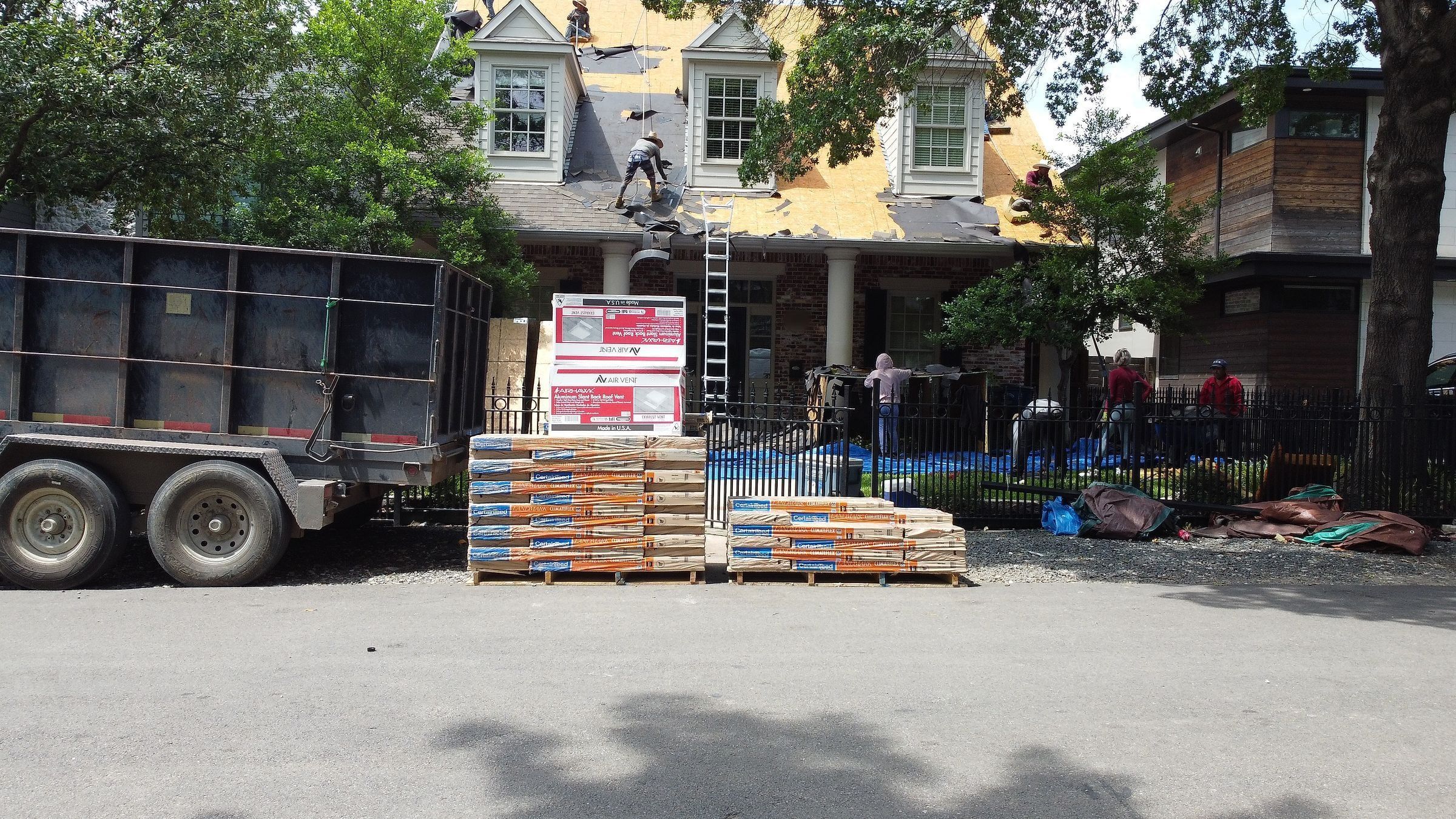
Start with three questions
Three things decide most repair-or-replace calls: how much of the roof is damaged, how much life the shingles have left, and whether the decking underneath is still solid. One damaged area on a sound roof is a repair. Damage spread across several slopes, on worn shingles, is usually a replacement.
We look at all three on every roof inspection. Age is a starting point, not the answer. A 12-year-old roof that took two hailstorms can be in worse shape than an older roof that never did. American Roofing Guide gives architectural shingles in Arlington a planning service life of 25 to 30 years (American Roofing Guide, 2026), but North Texas heat and hail are hard on any roof.
When a repair is enough
A repair makes sense when the problem has one clear cause in one place and the roof around it is healthy. Typical examples are a cracked pipe boot, a few shingles lifted by wind, a flashing joint that has pulled loose at a wall or chimney, or a nail that has backed out and let water in.
Signs that point to a repair:
- The leak shows up in one spot and traces back to one penetration or flashing detail.
- Shingles on the rest of that slope still lie flat and hold their granules.
- The decking feels firm underfoot, with no soft spots or sag.
- The damage came from one event, such as a limb or a strong gust, not from years of wear.
A good repair should last. If it doesn’t, something bigger is going on. Our roof repairs page covers what we fix and how.
When replacement is the better call
Replacement is the better call when damage or wear covers a large share of the roof, when leaks keep coming back in new places, or when the decking has started to fail. At that point every repair is a patch on a system that is wearing out, and the money spent on patches doesn’t carry forward.
Signs that point to a new roof:
- Granule loss across whole slopes, with bare or shiny patches on the shingles.
- Curling, cracking or brittle shingles that break when lifted.
- Leaks in more than one area, or the same leak returning after repair.
- Soft or sagging decking, or daylight visible from the attic.
- Hail bruising across most slopes, not just one or two.
- A second layer of shingles already nailed over the first, which hides problems and adds weight.
If you’re weighing the cost, our roof replacement cost guide explains what moves the price, and roof replacement explains how the job runs.
Hail damage changes the math
After a hailstorm, the answer often depends on your policy as much as the roof. If covered hail damaged most of the roof, a claim may pay for a full replacement minus your deductible. If the insurer approves only some slopes, you may be deciding between a partial repair and paying the difference for a full roof.
File the claim before you sign a contract for a full replacement, because the adjuster decides what the policy covers. We document the damage with photos, meet the adjuster on the roof and explain what we see. We are not public adjusters and we don’t negotiate the claim for you.
Roof age also matters to your insurer. The Texas Department of Insurance notes that as roofs age, some companies switch roof coverage to actual cash value, and a roof in poor condition may not be covered at all. More on that in ACV vs replacement cost and our storm damage page.
The shingle-matching problem
Patching an older roof often leaves a visible mismatch, even with the same brand and color name. Shingles fade and weather in the sun, and manufacturers change or discontinue colors. On a roof that is otherwise healthy, many homeowners accept the mismatch. On a roof near the end of its life, it is one more reason to replace.
Before we patch, we tell you whether the repair is likely to show from the street. If it will, and the roof has other wear, we price both options so you can see the difference in writing. For help talking it through with any contractor, see best ways to talk with your roofing contractor.
Get a straight answer on your roof
The quickest way to settle repair or replace is to have someone walk the roof. Our inspections are free. We photograph what we find, show you the photos, and tell you whether the roof needs a repair, a replacement or nothing at all.
Book a free inspection or call (817) 754-9484. We’re based in Arlington and have served homeowners across DFW since 2017.